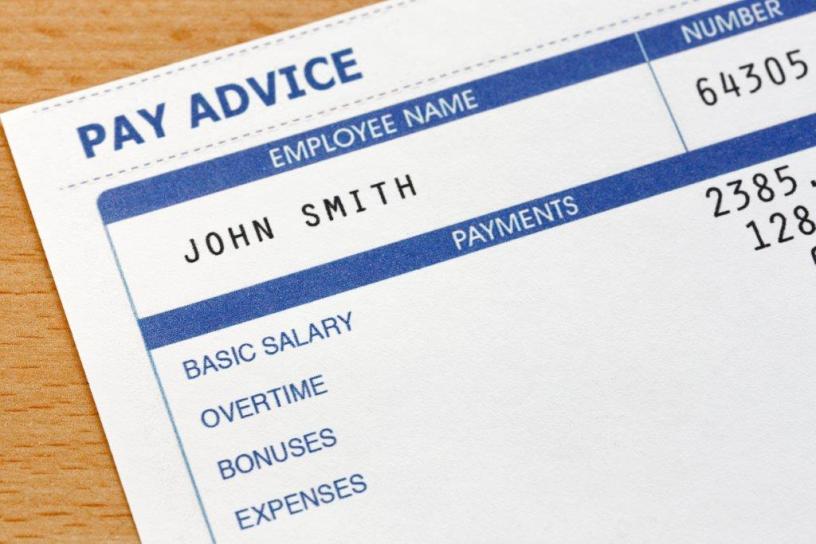
Back in 2020 I posed the question whether the widespread practice of employers uploading payslips onto a portal which required a worker to log in amounted to a breach of a worker’s rights under section 8 of the Employment Rights Act 1996.
As a union rep I also at one point tried to get the union to support a challenge on this point (which I think has potential indirectly discriminatory aspects with reference to the protected characteristics of sex, disability and potentially age) but that fizzled away. At the time I did research ET decisions on the point and they were varied and inconsistent on the issue so it is nonetheless good to have this position subject to a declaration.
My view then was that, without something more (e.g. an express notification of its availability on or before the payment date), the practice was inconsistent with the statutory right. I still think that is right but the Employment Appeal has now disagreed with that argument so that has put me back into place!
The specific statutory right in section 8(1) Employment Rights Act 1996 is that “A worker has the right to be given by his employer, at or before the time at which any payment of wages or salary is made to him, a written itemised pay statement.”
The specific issue in Leedham is whether an electronic access to the payslip to which a worker can choose to access satisfies the right “to be given” an itemised pay statement. On the central issue of whether the EAT found:
I accept the respondent’s submission that in principle the statutory obligation may be satisfied by electronic means. Consistently with the authorities recognising that delivery or provision may in an appropriate context be effective constructively, there is no requirement in section 8 that the document be physically transferred to the worker.
However, it continued (emphasis added):
It is both correct and important to recognise that section 8 requires the information to be given in a form which the worker can in practice access. A system which, whether by reason of cost, technical barriers, or other constraints prevents an individual employee from obtaining their payslip would not satisfy the statutory purpose. Equally, a system which imposed specific or material costs on the employee as the price of access in their entitlement or which required them to undertake obligations going beyond what is reasonably incidental to receipt might in an appropriate case fall short of compliance.
This emphasis on the practical accessibility is a key qualification and it is wrong to assume that an electronic pay statement will always discharge an employer’s statutory obligation. To give a practical example, if a worker is genuinely digitally excluded (and there is significant research that this is a very real issue for some) I can imagine that same system accepted in Leedham may may on different facts related to a worker prove to be a breach. In fact, the judgment recognises that possibility saying [at 32] “There may well be circumstances … where an individual employee has a specific difficulty which prevents them from using that method.” I happen to think the fact that that is a possibility is an argument against the position the EAT adopted and introduces an uncertainty for employers.
One area where I have seen infractions of this right is in circumstances of extended worker absence from the workplace, be that sickness, maternity and paternity leave, or extended breaks (the very times there is more likely to be pay disputes and adjustments). Do workers at those times have reasonably unimpeded access to the material? Of practical relevance for employee representatives is whether an employee has unimpeded access to this material at those times (for example, does an employee have to use employer IT equipment to access?).
The upshot of the decision is that while clarifying what was a slightly academic uncertainty it means where there are concerns about compliance then this needs to be founded either on ways an employer systems generally impose unreasonable conditions to access pay statements or how individual circumstances similarly impede access.
___
Want to stay updated or found this helpful?
Have you found this article helpful? If yes, I’d love hear from you but also request you would consider showing your appreciation by donating to the Free Representation Unit here: Donate – Donation amount – JustGiving.
The Free Representation Unit (FRU) is a charity dedicated to providing free legal representation to those who cannot afford to pay, before Tribunals in the Greater London area where legal-aid is unavailable. Founded in 1972, FRU is one of the country’s foremost providers of free legal service.
This blog is specifically intended for the benefit of trade union reps and members but I hope will be of interest more widely to other advisors, and workers. If you are not a union member then now is a good time to put that right, the TUC offers help selecting the right union to join (although feel free to message me if you’re unsure about what’s best and I am happy to make a suggestion depending on your circumstances).
If you are among the number of employment lawyers and paralegals who
work in the legal sector following this blog why not join the Legal Sector Workers United (LSWU)?
If you have found this post or site helpful please think about subscribing to the email list by entering your email address below or by liking the blog on Facebook.

