The Jesuit priest Baltasar Gracian once said “there is always time to add a word, never to withdraw one.” When that word is are “I withdraw” and are uttered within earshot of a Employment tribunal then the late priest is certainly on to something.
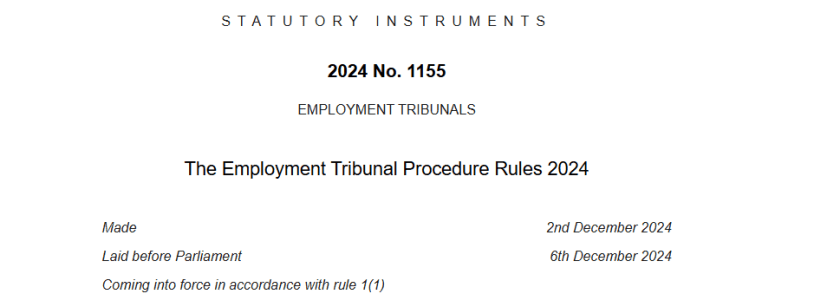
If a claimant has an employment tribunal claim that has been submitted then they may withdraw this quite simply. Unlike litigation in other areas where there are formal forms that need to be completed to withdraw a claim, a simple email or oral communication in a hearing saying “I withdraw my claim”, or words that effect will suffice. A withdrawal, though informal in process, is fatal to a claim; the relevant part of Rule 50 of the 2024 Rules of Procedure make this clear, where: “a party advancing a claim informs the Tribunal, either in writing or in the course of a hearing, that their claim, or part of it, is withdrawn, the claim, or part, comes to an end.”
As explained by the EAT in Segor v Goodrich (2012) the only requirement for a withdrawal of an ET claim to be valid is that it is “clear, unambiguous and unequivocal.”
Given the informality of the process to withdraw an ET claim it is not surprising that sometimes wires get crossed and the ET thinks a claim has been withdrawn when that is not the intention. You may have noted the requirement on whether a withdrawal is made is an objective one, is the withdrawal clear, unambiguous and unequivocal? It is not part of the requirement that the person giving the withdrawal intended to withdraw the claim – and this can get claimants, and especially unrepresented claimants in hot water.
In Segor the judge observed that “[l]awyers may sometimes be accused of being too pedantic and precise in their use of language” which may explain why those falling foul of inadvertent withdrawals are usually unrepresented.
To give an example, I once assisted (after the fact I should make clear, given the below!) a claimant who had unpaid wages claims against an employer. Subsequently, the claimant pursued new discrimination claims in a new ET claim form. The claimant agreed terms of settlement for the wages claim and this was settled by an ACAS COT3. The settlement was for that first claim only and did not settle the second claim. However, the claimant sent an email withdrawing the claims (not claim) she had against the Respondent although her intention was only to withdraw the first claim (following settlement). However, the withdrawal while not intended was clear and unambiguous and so the discrimination claim was also automatically ended. Unfair as that outcome was, it was not a decision that could be confidently challenged and the language used was clear, unambiguous and unequivocal.
This case was brought to mind because a couple of days ago the EAT published another case on the issue – McCrory v Healthwatch Stockport Limited (2026). In that case the ETdismissed the claim because of a withdrawal.
In this case the context was clear the claimant did not unambiguously withdraw. Against the background of costs threats against a claimant in one email the claimant signalled the possibility of withdrawing saying “I can give consideration to withdrawing today”. In a later email on 31 May 2024 he said “I wish to confirm that I wish to withdraw my claim … unless the tribunal would not apply a costs order”. That “unless” adds equivocation into the withdrawal and so could not properly be relied upon with clarification.
Having seen that equivocal withdrawal an employment judge (quite properly) wrote to the claimant on 4 June 2024 to ask the claimant to clarify his position within 14 days. However, before that 14 day deadline had expired a ET legal officer (inexplicably given the 4 June 2024 correspondence) treated the claim as withdrawn and cancelled the upcoming hearing telling the claimant this on 9 June 2024.
On the next day, 10 June 2024, but not having seen the 9 June letter the claimant replied to the 4 June 2024 clarification request confirming he wished to proceed with the claim. On 20 June 2024 a different employment judge directed that the claimant should be told the claim was now dismissed saying “the claim was unambiguously withdrawn. It was correctly dismissed on withdrawal”.
Reading the communication it is difficult to comprehend that the employment judge had read the emails in question as they are far from unambiguous and unequivocal, but that was the decision. As the EAT observes (para 57 of the judgment):
On a proper reading, the second email remained equivocal and any doubt falls away when it is read with the first. Accordingly, the only possible conclusion was that the claim had not been withdrawn. That meant that the claim did not automatically come to an end and there could be no judgment on withdrawal.
The EAT undoubtedly came to the right decision which means the claimant’s case has been reinstated, albeit with an 18 month delay.
What is clear that a claimant cannot always trust an ET to interpret written correspondence correctly (in addition to the legal officers three judges say they reviewed the files and two perversely interpreted an ambiguous withdrawal as being unambiguous).
The McCrory case does not add any new law but it is an important reminder of the importance of ensuring any correspondence with the ET is precise before it is sent – as this case shows you can’t assume the ET will know what you mean and, to be fair, they are working under such backlogs that they are less likely to have the time necessary to consider carefully.
Given the harshness of the consequences of an unintended withdrawal of claim ending a case irrespective of its merits (which would be very unlikely to be allowed to be re-filed) it is always important to:
- Try not to draft and send an email straight away – take a break and re-read before pressing “send”
- If you are have more than one claim but only intend to withdraw one make that clear. For example, “I am writing to withdraw my claim under reference 1234567/2025. For the avoidance of doubt, I do not withdraw any other claims I have except under this reference number.
- If you are only withdrawing part of the claim again be specific on this. For example, “ I am writing to withdraw my complaint of unauthorised deduction of wages in claim reference 1234567/2025. The complaint’s I am withdrawing are at paragraphs 17-18 of the particulars of claim I submitted when making claim. All other claims in that claim are not withdrawn and I am still pursuing these.”
This of course seems simple advice – and it is. But it is advice that can make the difference between a claim being allowed to proceed to determination and one that is dismissed – even if that is not the claimant’s intention.
END of Post
___
Want to stay updated?
This blog is specifically for the benefit of trade union reps and members but I hope will be of interest more widely to other advisors, and workers. If you are not a union member then now is a good time to put that right, the TUC offers help selecting the right union to join (although feel free to message me if you’re unsure about what’s best and I am happy to make a suggestion depending on your circumstances).
If you are among the number of employment lawyers and paralegals who
work in the legal sector following this blog why not join the Legal Sector Workers United (LSWU)?
If you have found this post or site helpful please think about subscribing to the email list by entering your email address below or by liking the blog on Facebook.
 Employment Writes